Converting waste into energy and fuel
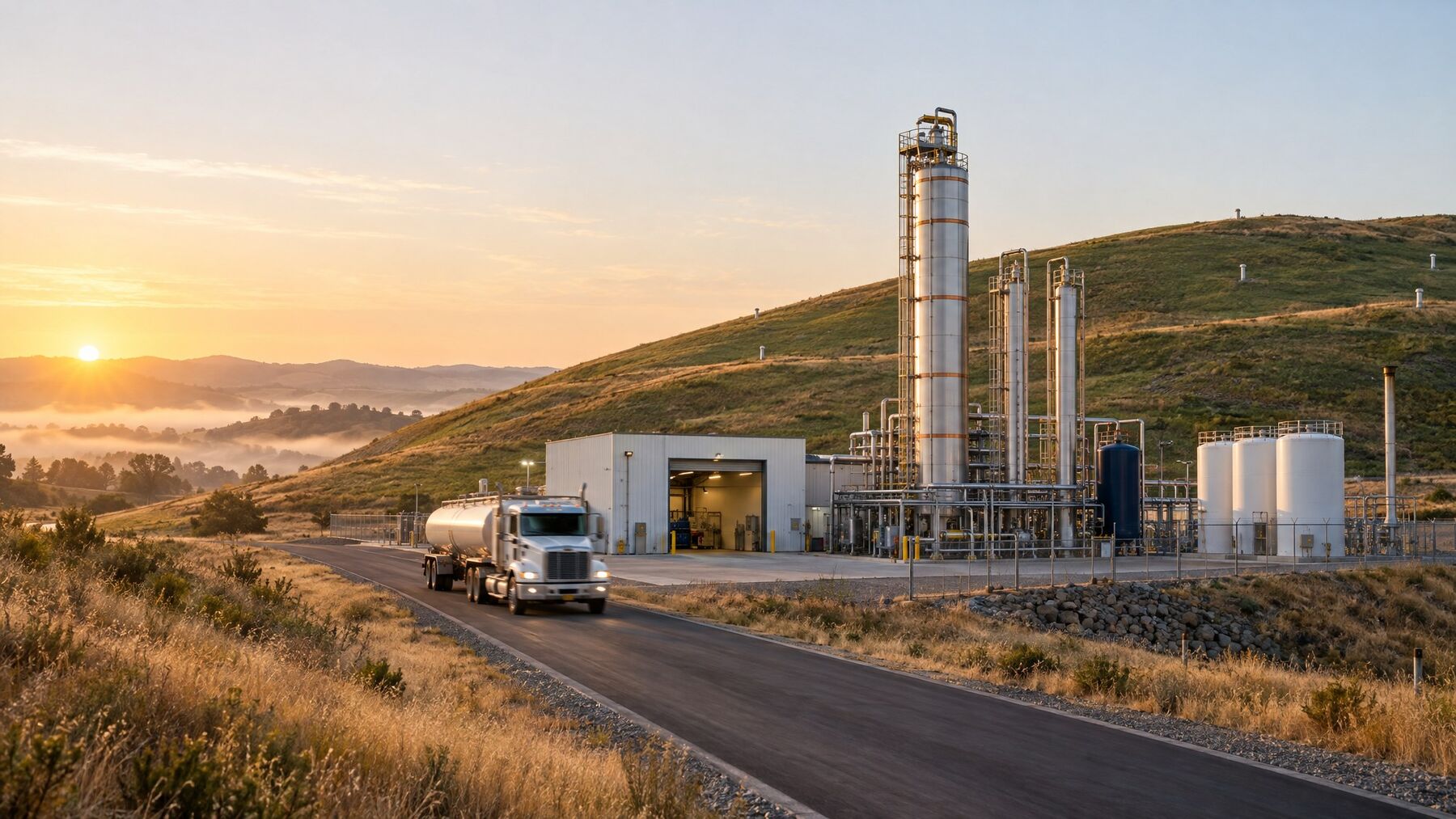
Landfill waste and landfill gas hold the energy that data centers are waiting for. We turn both into electricity at the landfill, with fuel cells and without combustion, and deliver it behind the meter, with no wait for a grid connection.
Annual energy and fuel potential: estimates, not forecasts. Sources: LBNL 2025 Update; LBNL, Queued Up, 2026; EPA; EIA.
Data centers need power now.
The grid makes them wait years.
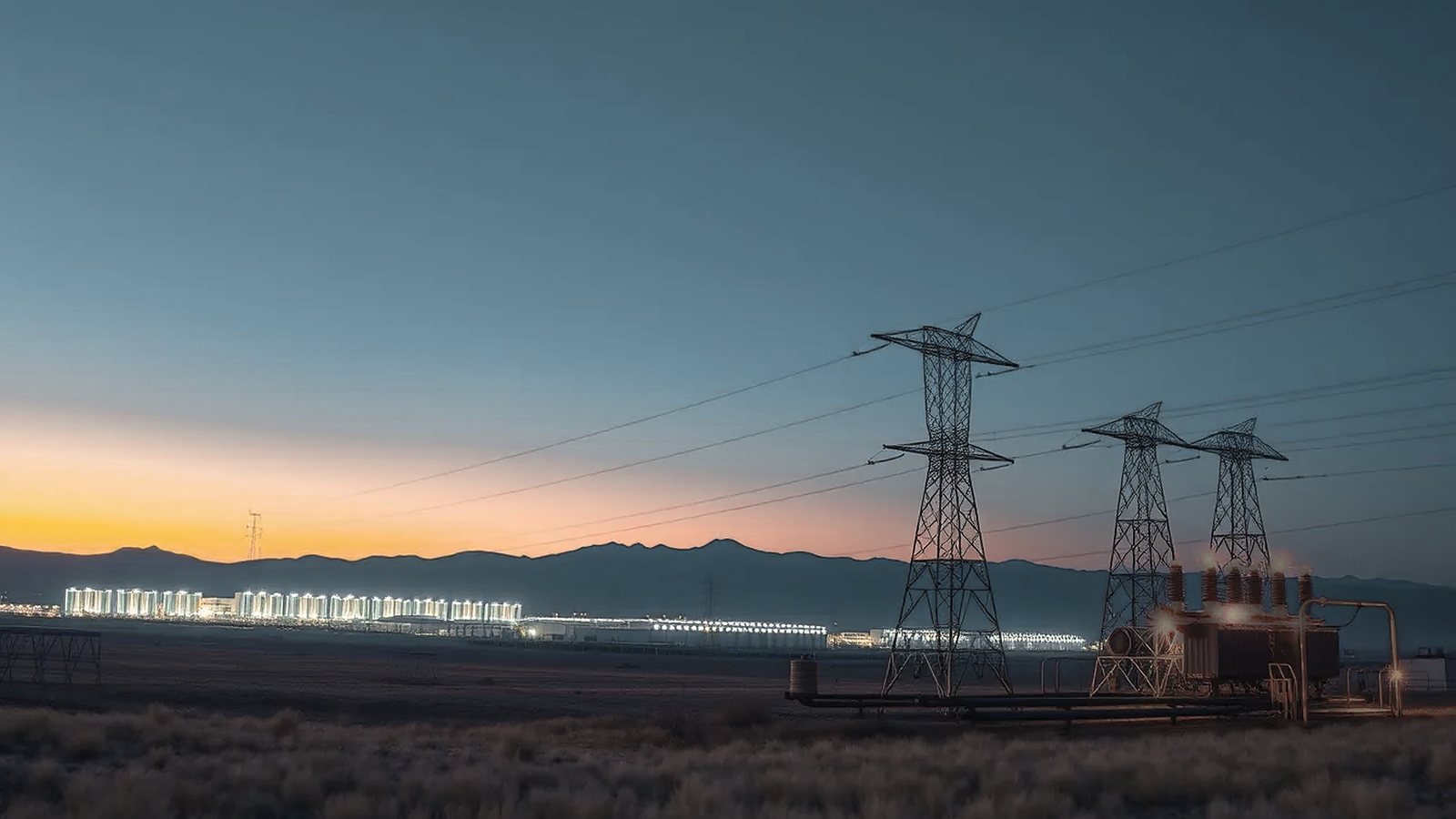
U.S. data centers used 192 TWh in 2024 and will need about 650 TWh in 2030. They cannot get it: a new power plant waits a median of five years for a grid connection, and PG&E alone has 12.7 GW of data center projects in its queue.
Meanwhile, we bury the energy in our waste.
Data centers: an estimated $60–125B a year for power by 2030. Landfill waste can supply over 40% of it.
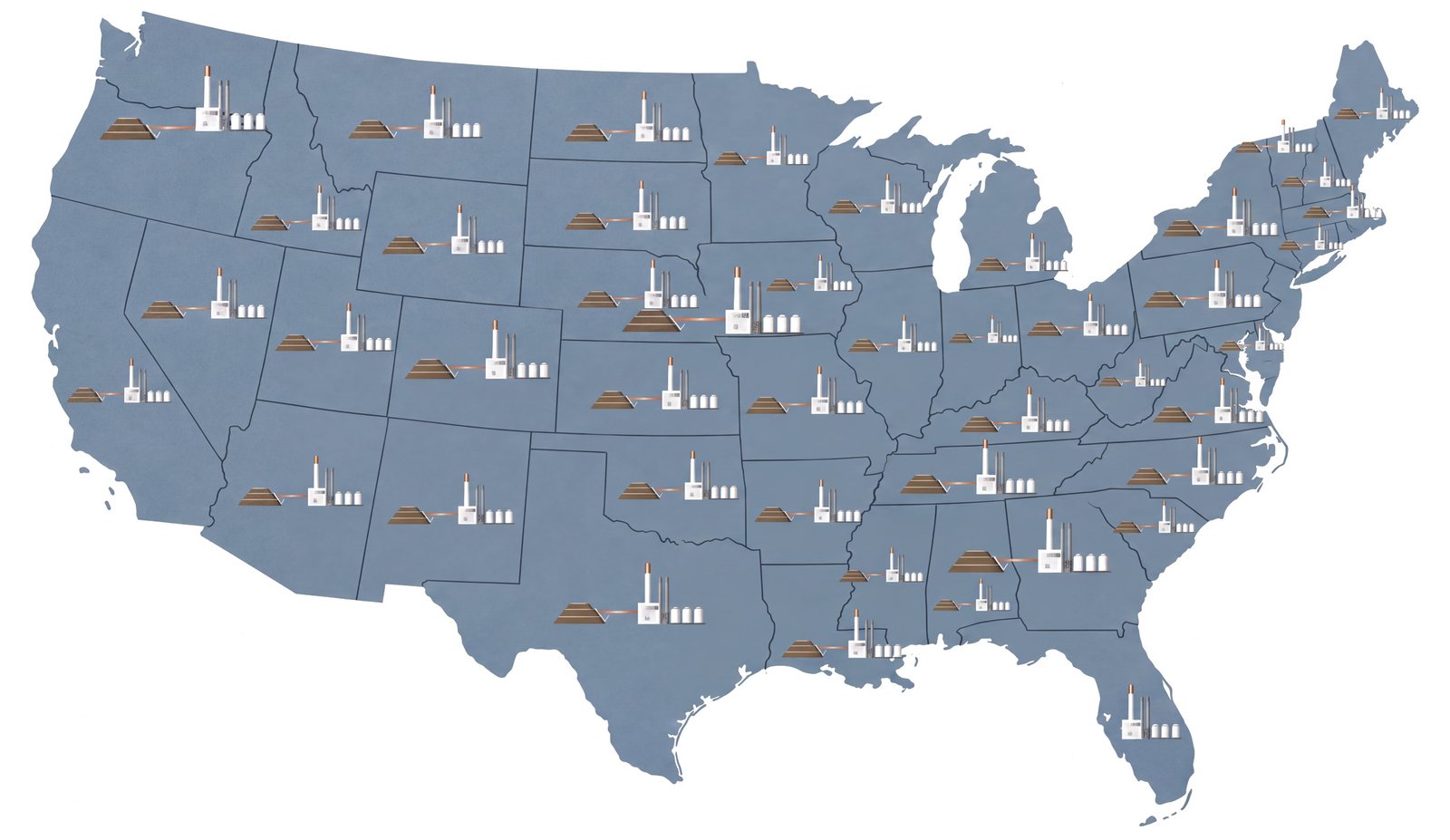
About 650 TWh a year by 2030. U.S. municipal waste could supply around 275 TWh of it: close to 300 million tons a year at close to 1 MWh per ton, sold on site, behind the meter.
“Millions of tons of recoverable material which could be used are needlessly buried each year.”
— U.S. Congress, Resource Conservation and Recovery Act, 1976
Estimated: 650 TWh a year at $91–193 per MWh, from the U.S. industrial average to the price a data center pays PG&E today. Sources: LBNL 2025 Update; EIA 2026.
Our own technology
Purpose-built for landfill waste
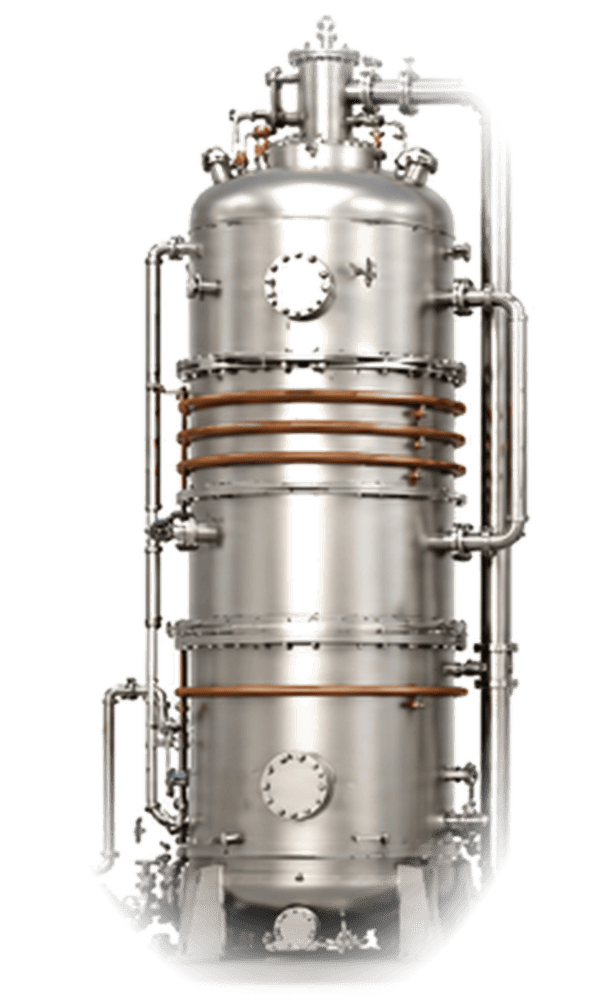
Others adapt a reactor built for a different feedstock. We design the full process for landfill waste from the start: our own reactor, simulator and digital twin, with feedstock sensing that adjusts operating conditions in real time.
5 patent applications
IP owned outright by Waste Forge Energy.
Modular, model-driven, faster to build
Each plant is a set of modules, brought on line one by one and extended to new feedstocks and fuels without re-engineering the plant. Our simulator and digital twin back every step from design to daily operation.
Pilot in 2028
25,000 t/day and ~2 GW by 2035
Pilot plant makes first power
2 t/day of landfill waste
First plant
60 t/day of landfill waste plus landfill gas, at a partner landfill
Fleet expansion
Ten 60 t/day units + one 200 t/day unit. 800 t/day combined capacity.
Fuels development on the same platform. New feedstocks.
Standard 200 t/day units. Biomass and additional fuels. 25,000 t/day, about 2 GW, by 2035.
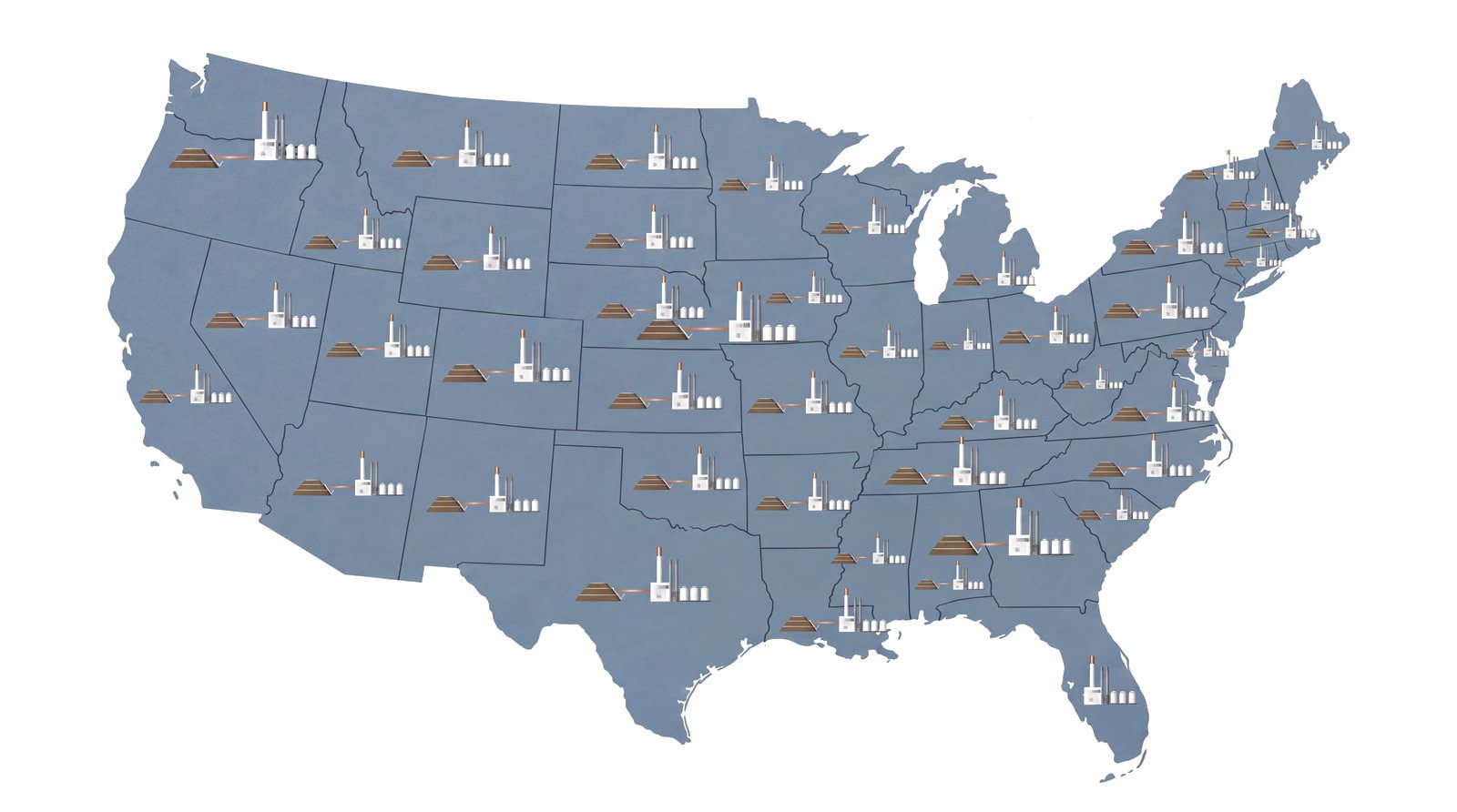
Power for data centers first.
Fuels from the same line come on top.
The gas we make from waste feeds fuel cells today and can feed a fuel synthesis line tomorrow. Methanol, DME and other fuels are planned on the same platform.
An integrated process
for converting waste into power
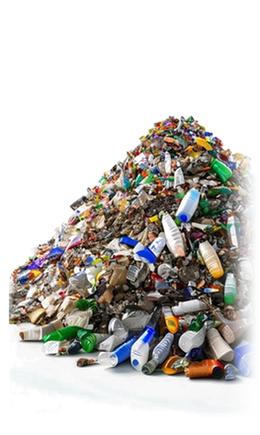
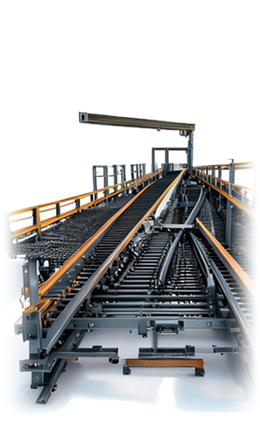
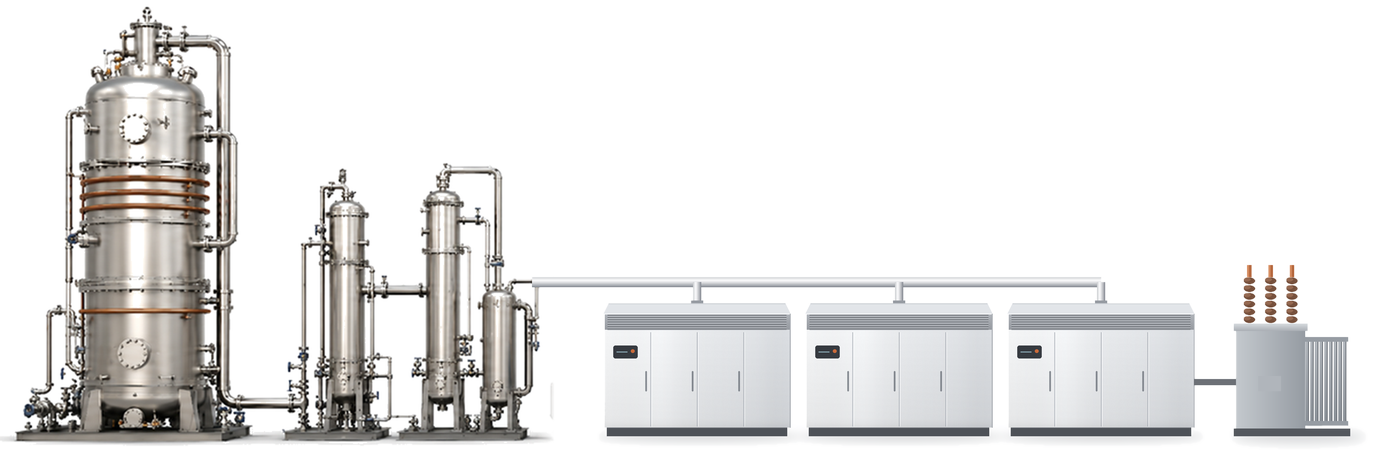
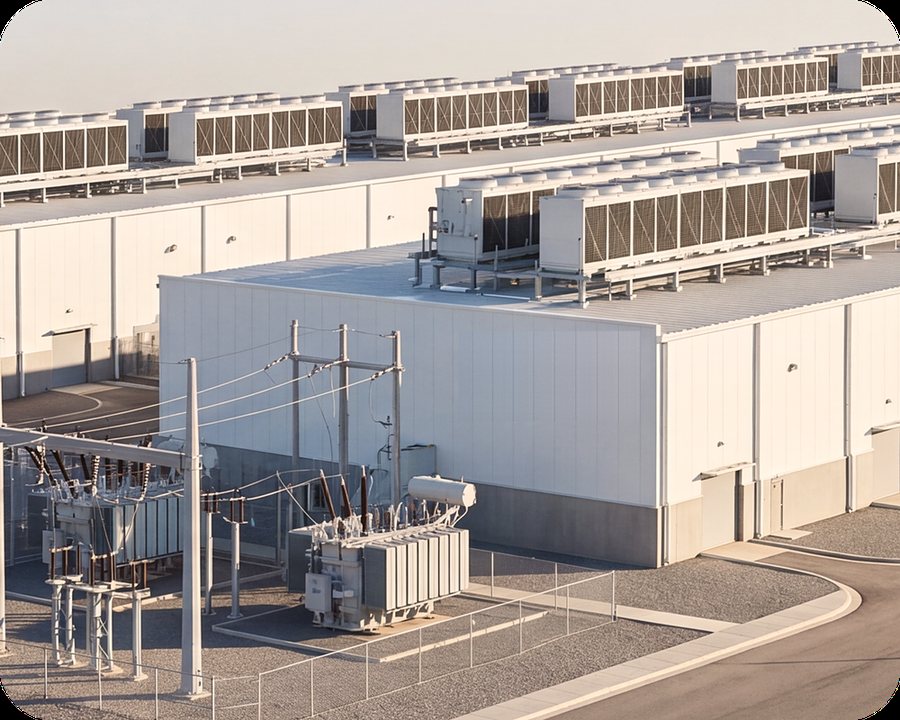
The landfill delivers the waste it already receives; sorting and preparation happen at our gate, so the host changes nothing.
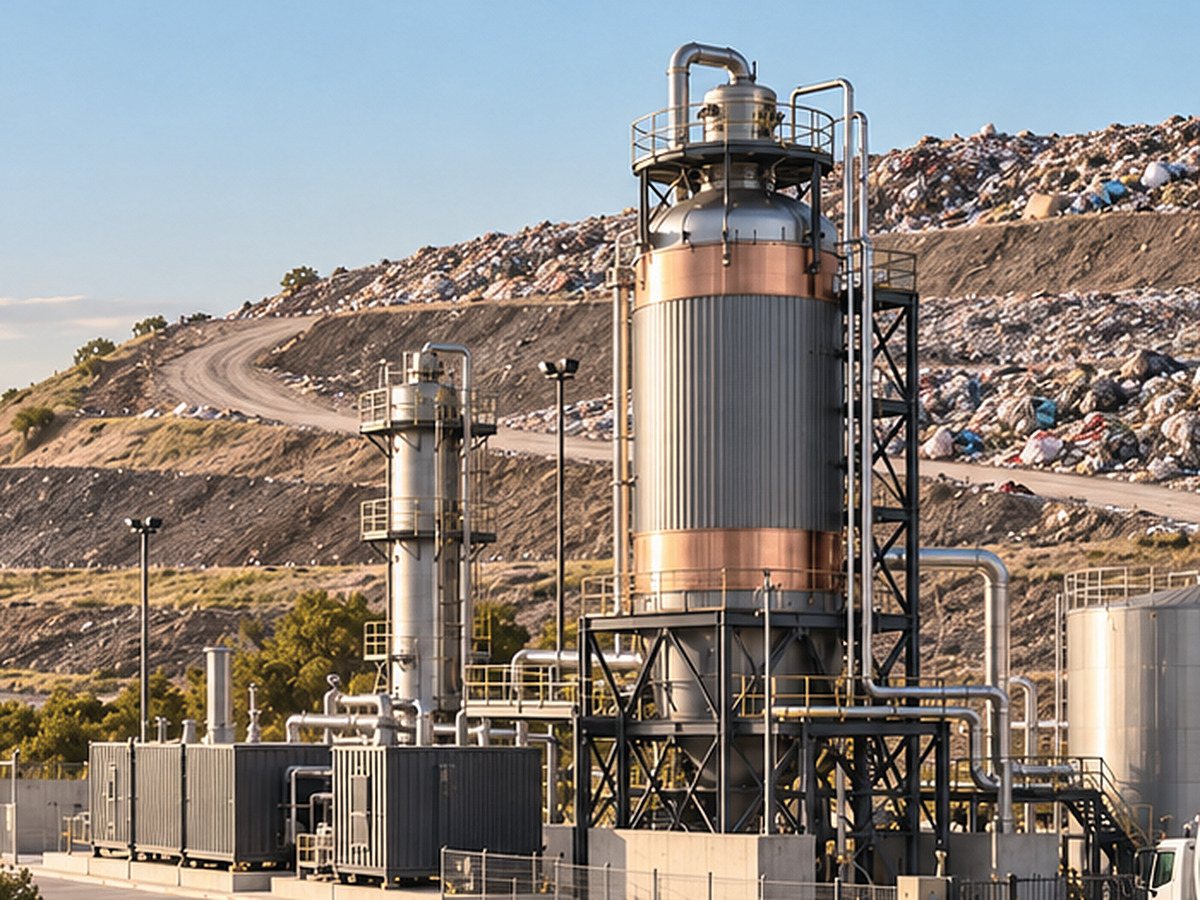
Landfill waste and landfill gas
Agricultural, forestry and refinery residues
Real-time control
for variable waste feedstocks
Sensors read every load, and the digital twin tunes the plant together with our operators.
Analyze
Sensors characterize the composition of incoming waste loads.
Protect
Upstream removal of contaminants protects the fuel cells.
Optimize
The digital twin sets the operating conditions for each feedstock.
Refine
Operating data updates the model to improve future process control.
First digital twin version completed in September 2026
Electricity for data centers
A modular plant at a landfill turns landfill waste and landfill gas into electricity with fuel cells, without combustion. The power goes to a data center behind the meter, with no wait for a grid connection. The plant also recovers metals from the waste.
Methanol, DME and other fuels
The same cleaned gas that feeds our fuel cells can feed a fuel synthesis line. Fuels come on top of power, from the same plant.
Methanol
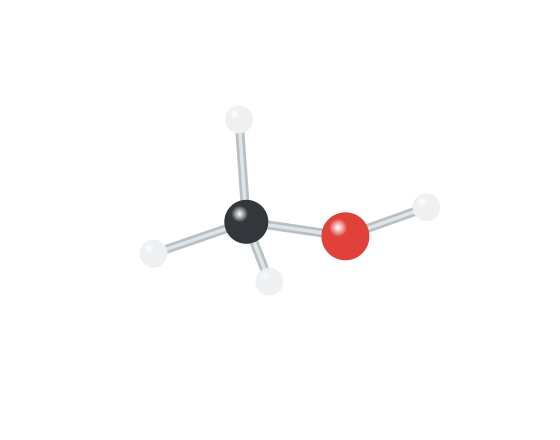
Methanol is the simplest alcohol, CH3OH: one carbon, four hydrogens and one oxygen. It is a clear liquid at room temperature, so it can be pumped, stored and shipped in ordinary tanks, and it trades on a world market every day.
CH₃OH
DME
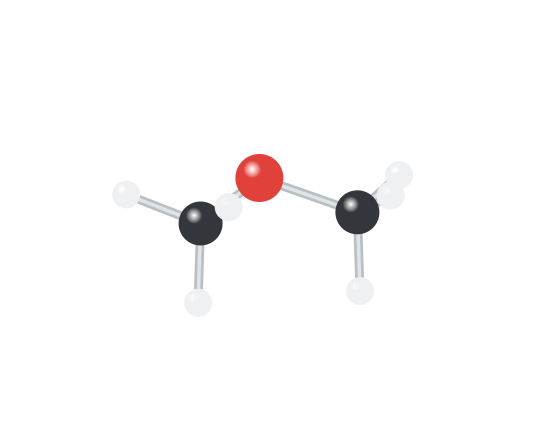
Dimethyl ether is the simplest ether, made from methanol in one catalytic step. It liquefies under mild pressure, just like propane, so it moves in the same kind of tanks.
CH₃OCH₃

Other fuels
Sustainable aviation fuel and other fuels from the same platform. Since July 2026, ASTM D7566 Annex 5 allows jet fuel made from methanol: a drop-in fuel that works in today's aircraft and airports.
ASTM International, 2026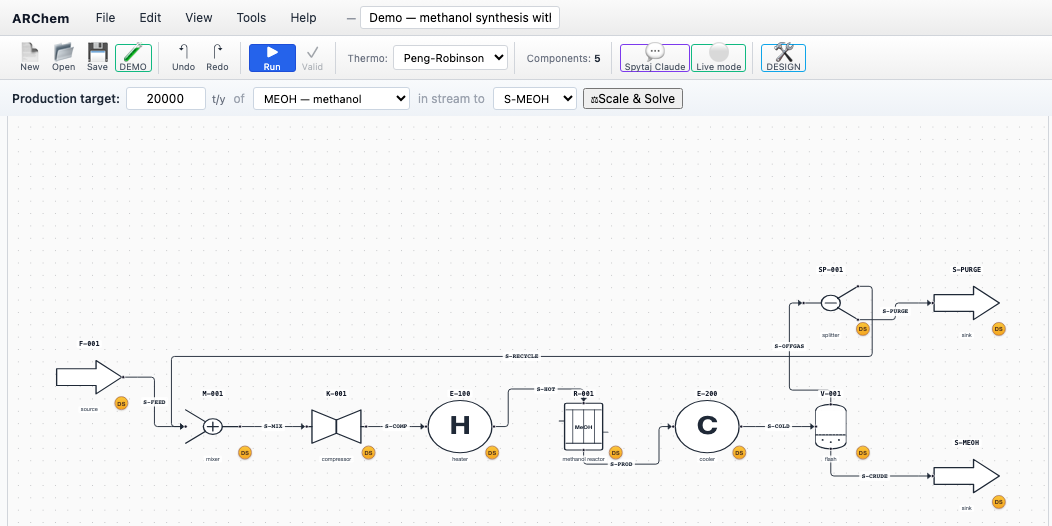
ARChem
ARChem is our in-house process simulator. We model reactors, gas cleaning, separation, fuel cells and heat integration for chemical, fuel and power plants and deliver a complete mass and energy balance, with a techno-economic analysis built on the model rather than on rules of thumb. We use it for our own plants and for other companies.
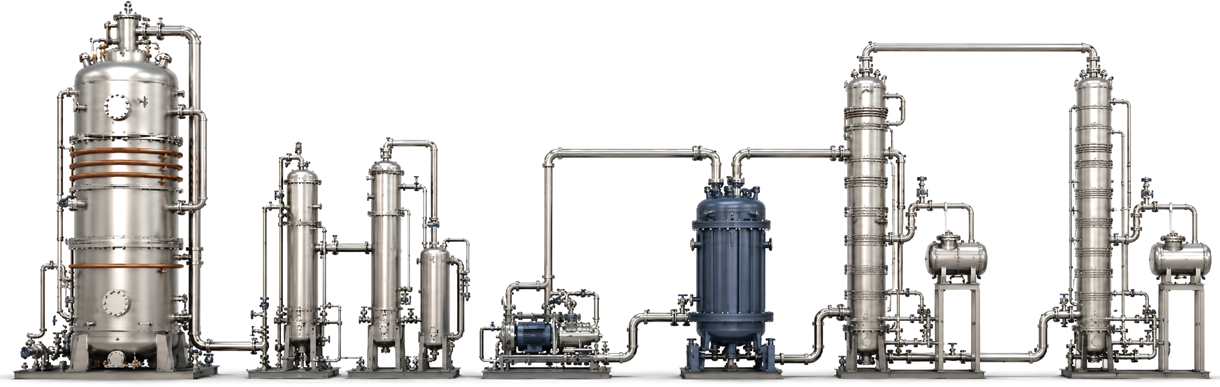
Digital twins
A physics-based twin of a plant that runs alongside it and helps the operators tune it to changing feedstock and conditions. We build them for our own plants and for chemical, fuel and power plants of other companies.
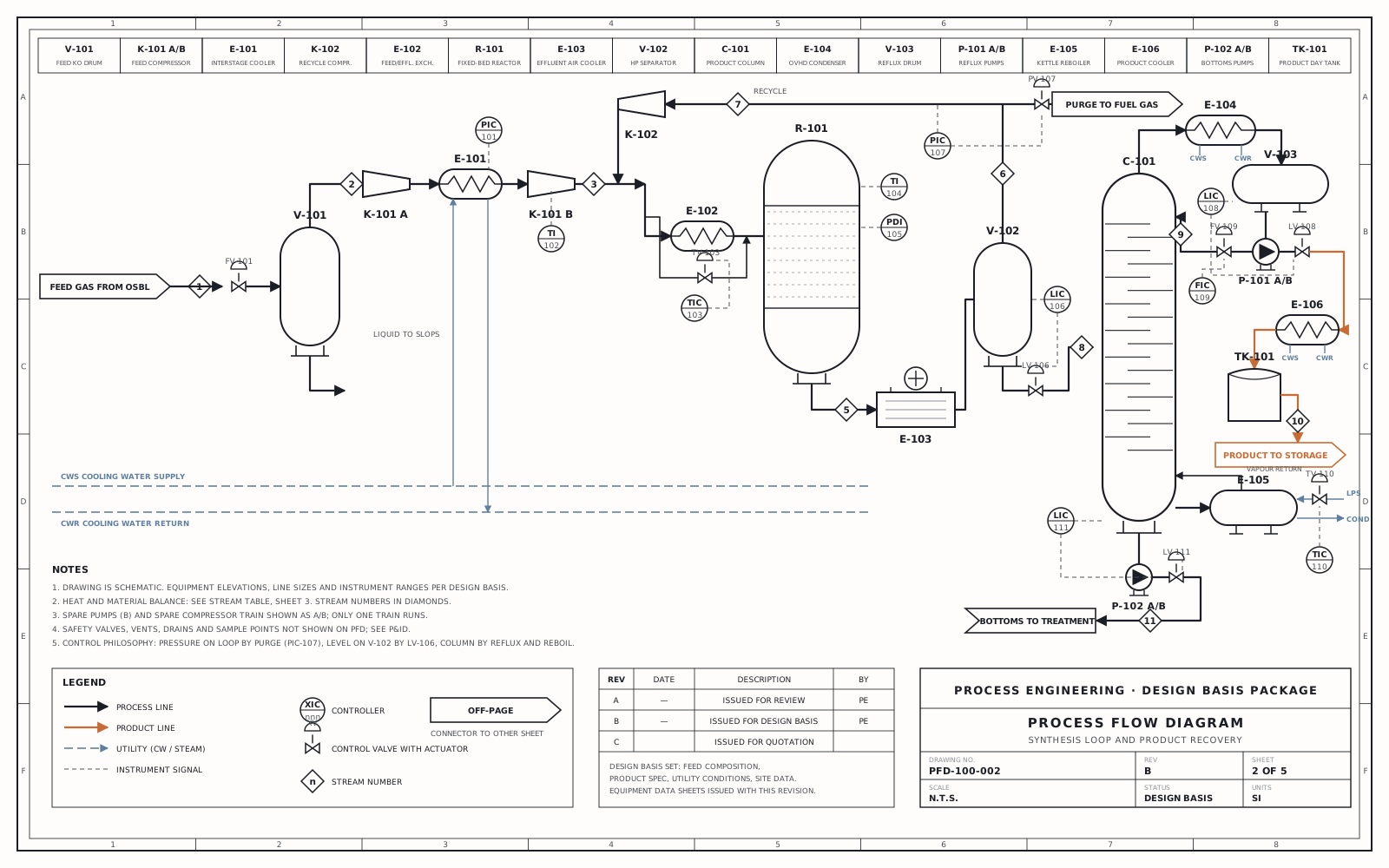
Engineering support when you build
Process design from concept to design basis: flowsheets, equipment sizing and specifications that suppliers can quote, and engineering support while the plant is built and started up.
Interested? Write to andrew@w-forge.com.
~300M tons of municipal waste
a year in the U.S.
Agricultural, forestry and refinery residues expand the opportunity. Here is what the U.S. throws away, what it contains and where it ends up.
Mostly carbon
Shares rounded to whole percent; the last bar is the remainder. Source: EPA, Facts and Figures about Materials, Waste and Recycling, 2018 data.
10 to 13 million Btu
A ton of household waste holds about 10 to 13 million Btu of energy, close to 1 MWh of electricity the way we make it.
U.S. EIA; U.S. DOE Bioenergy Technologies Office, 2019Unlike any other fuel, this ton arrives with a fee attached: a landfill is paid to take it. Our plant takes the same ton, keeps the tipping fee and turns the carbon into electricity.
Paid to bury it
Fifty years ago, Congress wrote the problem into law
“Millions of tons of recoverable material which could be used are needlessly buried each year.”
— U.S. Congress, Resource Conservation and Recovery Act, 1976
The Resource Conservation and Recovery Act of 1976 is the federal foundation of waste management in the United States. Its opening findings are still true.
Demand for electricity
meets an abundant resource
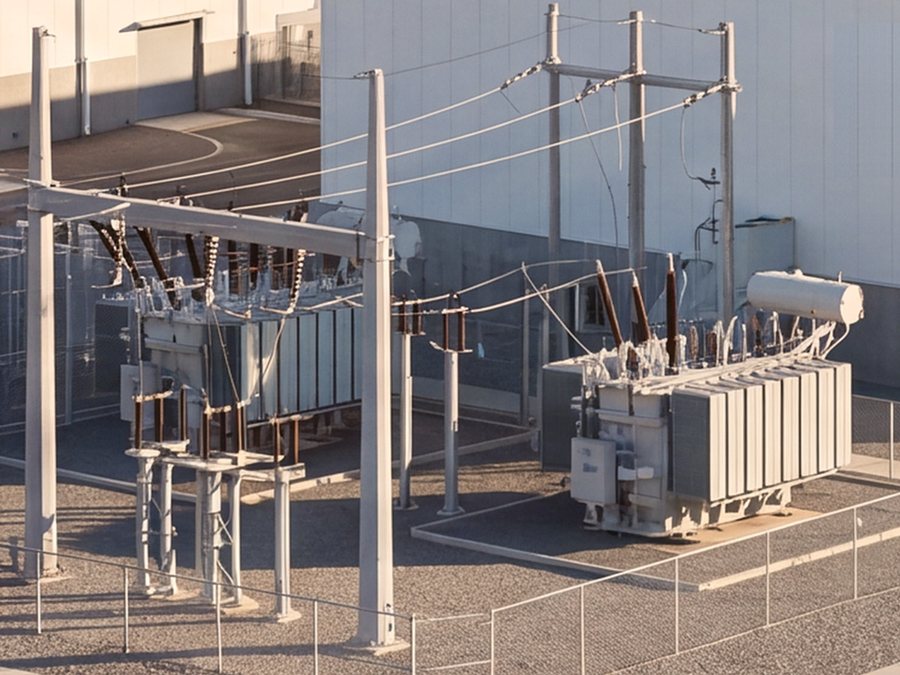
Grid connection delays
New power plants typically wait about five years to connect to the U.S. grid.
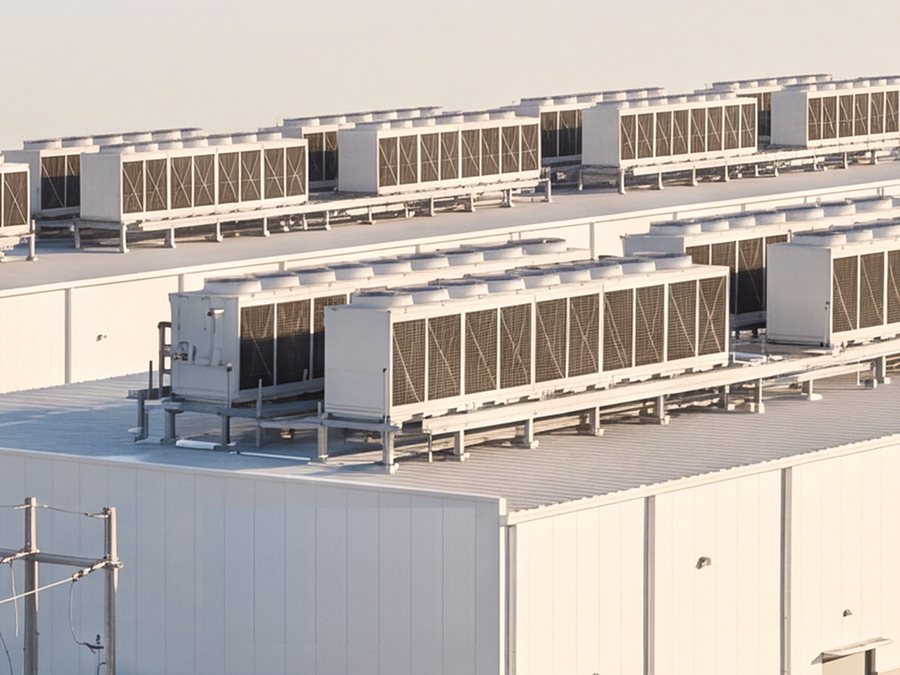
Data center demand
U.S. data centers used 192 TWh in 2024 and will need about 650 TWh in 2030.
On-site power
Fuel cells make power without combustion, next to the buyer, behind the meter.
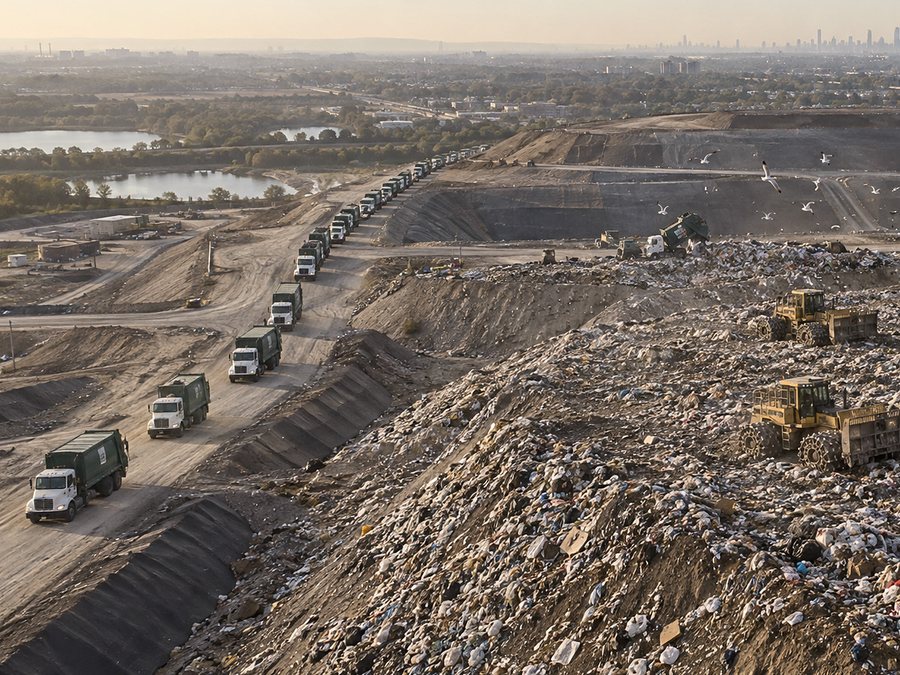
Waste disposal costs
Cities pay to have waste taken away, so our feedstock arrives with a fee attached.
A $50B first market inside $130B+ of U.S. waste energy
Annual energy and fuel potential: what each waste stream could yield in a year, from our first market outward. Full technical potential, not a forecast.
Power for data centers first; fuels from the same line come on top. Sources: EPA, EIA, DOE 2023 Billion-Ton Report, 2025 U.S. average prices; data center demand: LBNL 2025 Update.
FAQ
Why electricity first?
Data centers need firm power now and pay for it, and the grid cannot connect them for years. A fuel cell turns our cleaned gas into electricity in one step, so the first plants are shorter and simpler to build and run than a fuel plant. Fuels come later, from the same front end.
Does it need sorted waste?
No. The landfill delivers the mixed waste it already receives. Sorting and preparation happen at our gate: metals and minerals are separated, sensors read each load, and our digital twin sets the operating conditions for that feedstock.
Is this incineration?
No. We do not burn waste. One thermal step turns it into gas, the gas is cleaned, and fuel cells turn it into electricity without combustion.
How does the power reach a data center?
Behind the meter, so it does not wait in the grid queue. The best site for a plant is a landfill, where both the waste and the landfill gas are.
Where will the first plant be?
The first 60 ton-per-day plant is planned for 2029 at a partner landfill, after a 2 ton-per-day pilot in 2028.
How big is one plant?
The first plants process 60 tons of landfill waste a day plus landfill gas. From 2031 the standard unit is 200 tons a day.
Do you still make fuels?
Yes. Power comes first; methanol, DME and other fuels follow from the same plant.
What makes the technology yours?
We develop the full process ourselves and own the IP, five patent applications, supported by our own simulator and digital twin.
How fast can you scale?
Standardized designs and suppliers let us replicate plants. Our roadmap: a 2 ton-per-day pilot in 2028, a 60 ton-per-day plant in 2029, 800 tons a day by 2031, and 25,000 tons a day, about 2 GW, by 2035.
Who is behind Waste Forge Energy?
A chemical and process engineering team with more than ten years in waste-to-energy and waste-to-fuel R&D; the founder is a visiting researcher at Stanford's SUNCAT center.
Let's talk.
Send us a message and we'll get back fast.
Prefer email? andrew@w-forge.com